
Claude Monet’s Field of Poppies near Giverny, 1890, oil on canvas.
Of course, one of the favorite galleries I visited at the Museum of Fine Arts in Boston recently was the Impressionist and Post-Impressionist. In 1874 a group of young painters including Monet, Renoir, Degas, Cezanne, and Pissarro, organized in Paris an exhibit to demonstrate their independence from traditional painting. They were criticized because much of what was on display was unfinished canvases based on “hasty impressions of nature” and the group was dubbed Impressionists.
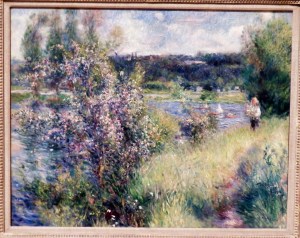
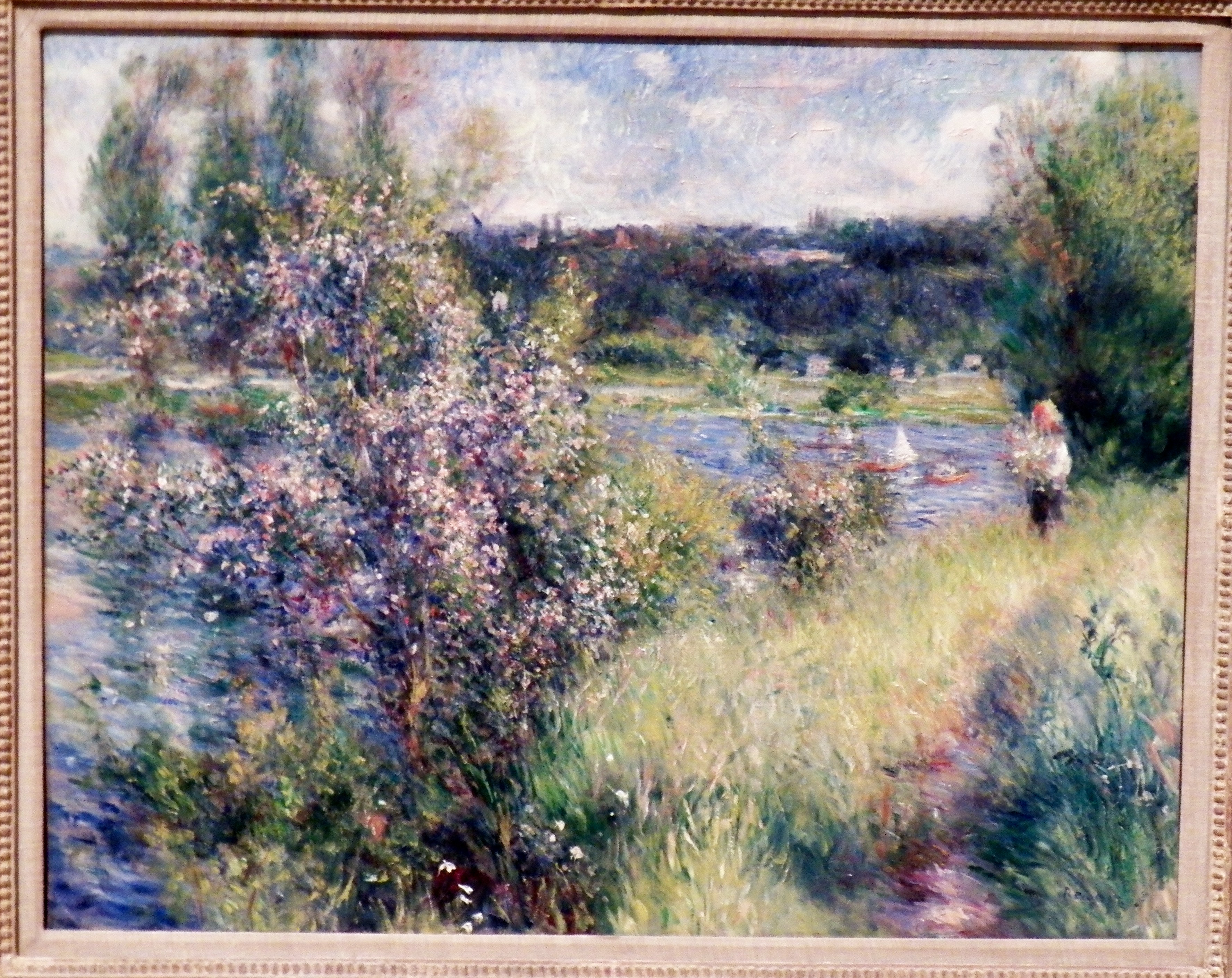
Pierre-Auguste Renoir, The Seine at Chatou, 1881, oil on canvas
This Renoir is a great example of this period. This radiant landscape on the Seine just west of Paris shows distinct feathery brushstrokes from long to short, thick to thin. Renoir wrote to a friend at the time of the painting, “I’m struggling with trees in flower, with women and children, and I don’t want to look at anything else.”
This is what happens when painters begin to work outside in “plein-aire”. You begin to see everything differently and can’t wait to get out there and try to capture it on canvas.
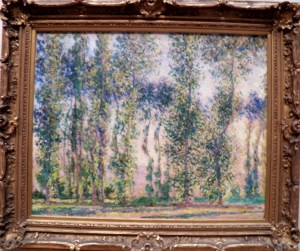
Monet’s Poplars at Giverny, 1887, oil on canvas.

Renoir, Rocky Crags at L’Estaque, 1882, oil on canvas
Read Full Post »








 The Studio